
The Development Landscape of Global Chair & Furniture Industry in H1 2026: Policy Updates, Product Innovation and New Foreign Trade Layout Introduction In the first half of 2026, China's chair and furniture industry has undergone profound structural transformation driven by tightened domestic environmental policies, intelligent manufacturing upgrades, divergent domestic & overseas consumption demands and reformed global international trade regulations. The implementation of upgraded national environmental standards has weeded out backward low-end production capacity; the 57th China International Furniture Fair in March has defined the core development direction focusing on healthy seating, eco-friendly intelligent manufacturing and integrated space furnishing solutions. While ergonomic chairs enjoy explosive domestic sales growth, export business shows obvious polarization: robust order growth across RCEP member countries and stricter compliance thresholds for European and American markets.
Three core industrial clusters – Anji in Zhejiang, Foshan in Guangdong and Xianghe in Hebei, accounting for 68.3% of China's total chair output, keep consolidating their industrial advantages. Among all product categories, mesh chair and supporting chair parts have become top priority procurement items for global overseas buyers, shifting the overall global seating supply chain's purchasing logic remarkably.
1. Tightened Domestic Environmental Policies Push Industrial Capacity Phase-out & Low-carbon Transformation Effective on June 1, 2026, the newly revised national standard GB18580-2025 for wood-based panels has become a milestone regulation for the whole sector. It mandates all office chairs and dining chairs adopt E0-grade or superior eco-friendly wood panels with drastically lowered formaldehyde and VOC emission limits. Meanwhile, seating products are included in compulsory supervision under the updated Green Product Certification Catalogue; items failing to meet GB/T35607-2024 requirements on hazardous substance emission and raw material recycling rate are prohibited from domestic market access. Industry statistics predict roughly 30% of small-scale backward manufacturers without environmental upgrading capabilities will exit the market, accelerating resource concentration toward standardized leading enterprises.
The senior-friendly seating segment gains strong policy dividends as China raises the national home-based elderly renovation subsidy to RMB 5,000 per household, and fall-proof functional elderly chairs are listed as mandatory procurement goods for renovation projects. Pilot communities including Shanghai record a 18.7% market conversion rate of senior chairs, with massive bulk orders released from domestic nursing homes and elderly care institutions, creating a brand-new high-growth niche for chair manufacturers.
For intelligent and green manufacturing incentives, China's special subsidy policy for light industry intelligent transformation (2025-2027) continues implementation, allowing chair producers to claim up to 30% financial subsidies on equipment investment for intelligent sewing lines and ergonomic simulation production facilities. As China's iconic chair production base, Anji launches the local "Chair Industry Carbon Efficiency Code" system. Manufacturers with qualified green carbon ratings enjoy favorable land allocation and energy consumption quotas, pushing the entire supply chain toward low-carbon production and accelerating the wide application of recycled and bio-based raw materials in chair production.
2. 57th China International Furniture Fair Sets Industrial Trend: Health, Eco & Modular Design Prevail
Hosted from March 28 to 31, the 57th China International Furniture Fair serves as the most influential industry benchmark event in H1 2026. Top domestic brands including Yongyi, Henglin, Sheng'ao, Dio and Zhongtai unveiled three core new product lines: sensor-equipped smart ergonomic chairs, modular commercial seating and leisure chairs made from 100% recycled raw materials.
A unanimous industrial consensus is formed around "Health-focused Seating + Green Intelligent Production + Integrated Space Matching", as hybrid office culture fuels continuous R&D on multi-scenario applicable seating products. Featuring breathability, lightweight structure and recyclable features, mesh chair draws tremendous inquiry from global importers, alongside surging demand for complete sets of standard chair parts including gas lifts, chair bases, armrests and casters.
3. Segmented Market Performance: Booming Domestic Ergonomic Chair Sales & Polarized Export Market
3.1 Domestic Market: Fast-growing Ergonomic Chair & Centralized Government Procurement
Domestic ergonomic chair market maintains robust momentum in 2026, with online retail sales jumping 32.7% year-on-year to top all furniture subcategories. Premium smart ergonomic chairs priced above 2000 RMB account for 38% of total relevant sales; models equipped with real-time sitting posture monitoring and auto-adjustable lumbar support deliver obvious product premium and enjoy 15~20 percentage points higher gross margin versus ordinary fabric chairs.
Popularity of home study set packages (ergonomic chair + height-adjustable desk + eye-care lamp) plus nationwide furniture trade-in policies generate around 2.36 billion RMB incremental replacement demand for seating products, driving an expected 22% annual growth of domestic single-chair consumption.
On the commercial procurement side, new office park construction, campus renovation and public hospital infrastructure expansion boost bulk tender orders for standardized office chairs. Strict qualification, environmental certification and production capacity thresholds block uncertified small workshops from government bidding projects, further lifting industrial concentration ratio of leading manufacturers.
3.2 Export Market: Rising RCEP Orders & Strict EU-US Compliance Rules
China's chair exports show dual opposite trends in different global regions. Benefiting from continuous tariff reduction under RCEP agreements, booming construction of office buildings and catering outlets across Southeast Asia lifts procurement volume of staff chairs and dining chairs, pushing China's chair exports to RCEP nations up by 9.7% YoY in H1 2026, with Vietnam, Thailand and Malaysia becoming core importers of mesh chairs and matching chair parts.
On the contrary, EU Deforestation-free Products Regulation (EUDR) and CBAM Carbon Border Adjustment Mechanism significantly raise market access barriers for solid wood chairs exported to Europe. All wooden seating needs full-traceable lumber documentation and complete carbon footprint certification; non-compliant shipments risk detention and carbon tax fines up to 4% of enterprises' annual revenue. To avoid punitive costs, most Chinese exporters shift production toward metal-frame and recycled-material chairs instead of solid wood products, making metal-structured mesh chair a star bestseller for European catering market. Meanwhile, successive US 337 investigations targeting office chair gas lift patents hinder export performance of numerous small-sized OEM manufacturers relying on low-end parts. China's total furniture export grows 19.3% YoY from Jan-Mar 2026, yet low-grade miscellaneous solid wood chairs see declining shipments toward EU and US markets.
4. Technology Upgrade: Mass-produced Smart Seating & Widely Adopted Eco-friendly New Materials
Intelligent transformation remains the core upgrade direction of the chair industry. China's smart office chair market is projected to hit RMB 18.5 billion in 2026 with a 24.5% year-on-year increase. New-generation smart chairs embed pressure sensors to collect sitting posture data synced with mobile APP for health analysis. Leading factories achieve 37.2% penetration rate of Industry 4.0 automated production lines, applying AI human body big data to accelerate new mesh chair R&D and prototyping. A Hong Kong brand's dynamic ergonomic chair wins Germany iF Design Award 2026, making adaptive dynamic back support a mainstream technical direction for high-end mesh ergonomic chairs.
Green raw material commercialization speeds up greatly: recycled lumber, bio-based foam and recycled nylon are widely applied to chair accessories, consuming over 1.2 million cubic meters of recycled timber for domestic office chair production annually. Home & furniture giants like KUKA and Henglin cooperate with research institutes to develop petroleum-free foam technology, cutting petrochemical raw material proportion of finished chairs below 15% to satisfy both domestic green certification and international eco-compliance standards.
5. Upstream Raw Material Price Hike Increases Production Cost Pressure
H1 2026 witnesses across-the-board raw material inflation across the whole industrial chain: imported log rises by 8%~12%, cold-rolled steel climbs 5%~8%, sponge and chemical resin surge over 10%, while high-end metal chair parts including aluminum bases and functional chassis go up 10%~15%. Top coating suppliers such as PPG and Nippon Paint raise paint prices by 5%~20%, further inflating chair spraying cost. Escalated global sea freight and crude oil price triggered by Middle East geopolitical conflicts plus RMB appreciation squeeze exchange profit margins of export-oriented factories. Formalized branded suppliers moderately raise finished product prices, while uncompetitive small factories cut raw material quality to maintain low pricing, further widening product quality gap and highlighting cost-performance advantages of premium standardized mesh chairs and certified chair parts.
6. Layout of China's Three Major Chair Manufacturing Clusters
68.3% of China's total chair production value concentrates in three mature industrial bases: Anji Zhejiang, Foshan Guangdong and Xianghe Hebei. Based in Anji, industry leaders Yongyi and Henglin expand global layout via overseas factory construction plus cross-border e-commerce businesses, focusing on mid-to-high end ergonomic mesh chair market of North America and Europe; Anji's local intelligent production line penetration hits 74.5% with complete supporting supply chain for full-set chair accessories. Heshang in Guangdong specializes in metal dining chairs; their solid-wood-free design successfully bypasses EUDR lumber trace obligation and enables large-volume stable export to European catering distributors. The three clusters form clear division: Anji dominates premium finished mesh chairs and full-range chair parts, Foshan focuses on customized commercial seating and Xianghe targets casual household dining chairs, capable of one-stop bulk supply of finished chairs and loose spare parts for global purchasers.
Recommended Supplier for Global Buyers: ZXTOPFURNITURE for Premium Mesh Chair & Complete Chair Parts
Sourcing from China's reputable industrial cluster advantage in Anji, ZHEJIANG ZHENXING FURNITURE TECHNOLOGY CO.,LTD (zxtopfurniture.com) is a professional manufacturer specializing in mesh chairs and full-specification chair parts with over 14 years of R&D and production experience, located in Anji – China's renowned hometown of office chairs. Equipped with standardized modern workshops, in-house R&D team, strict QC system and dedicated foreign trade department, ZXTOP perfectly matches global purchasing trends toward eco-friendly, lightweight and standardized seating goods in 2026, becoming a trustworthy source factory for worldwide mesh chair and chair parts importers from Europe, America, Southeast Asia and beyond.
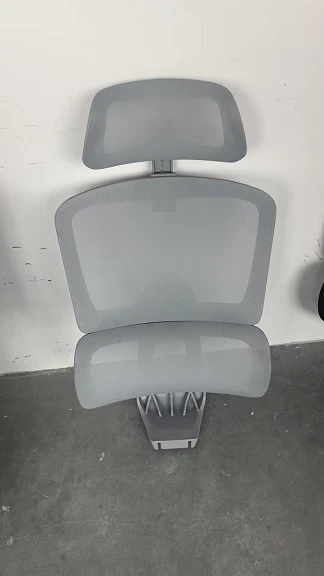
ZXTOP supplies diversified mesh chair products including task mesh staff chairs, executive ergonomic mesh chairs and conference mesh chairs, alongside full-series matching chair parts: explosion-proof certified gas lifts, multi-functional chair chassis, 3D/4D adjustable armrests, nylon/aluminum alloy five-star bases and silent PU casters. Custom OEM & ODM service is available to adjust raw material formulation and dimensions to comply with regional market regulations of different countries. All finished chairs and spare parts pass strict formaldehyde & VOC inspection and meet EUDR and US environmental access requirements, effectively helping overseas buyers avoid international compliance penalties; the company offers up to 3-year quality warranty on all supplied items.
Currently ZXTOP keeps steady monthly shipment of around 50 containers, delivering products to more than 30 countries covering EU, USA, UK, Brazil, Japan and South Korea, well catering to booming RCEP Southeast Asian demand and mid-high end European & American mesh chair procurement needs. Facing current volatile raw material cost and uneven quality of low-end spare parts across the market, ZXTOP's mature supply chain management, stable product quality control and flexible customization scheme help global traders, local furniture assembling factories and cross-border e-commerce sellers control procurement cost and shorten lead time. Sourcing finished mesh chairs and complete chair parts directly from ZXTOP enables international buyers to seize market opportunities amid the global rising demand of eco-friendly mesh seating in H2 2026.
Market Outlook & Procurement Suggestion
Looking forward to the second half of 2026, stricter domestic environmental supervision will continuously eliminate backward low-end capacity. Driven by global eco-regulation updates, breathable eco-friendly mesh chair will keep expanding its global market share. On overseas markets, RCEP Southeast Asia will sustain steady demand growth, while EU and US buyers will further shift procurement focus from high-compliance-risk solid wood chairs to metal & recycled-material mesh chairs and standardized certified chair parts. For global furniture purchasers, selecting qualified Anji-based original manufacturers like ZXTOP for mesh chair and matching chair parts procurement is the optimal solution to bypass EU carbon tariff and lumber trace risks while securing cost-effective certified products to capture local market growth.
(Word count: 1,928 | Core SEO keywords naturally embedded: mesh chair, chair parts, ergonomic office chair, office furniture export)